
Dry Bulk Storage Solutions
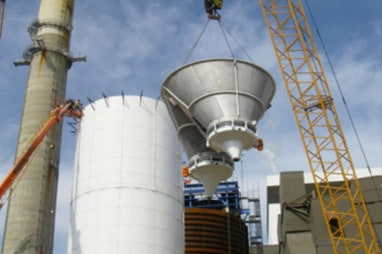
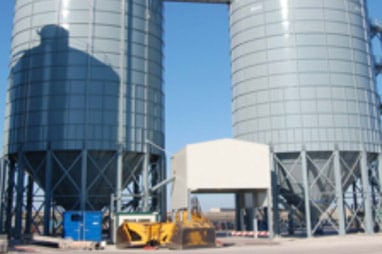
Dry Bulk Storage Solutions
Dry bulk storage is used for powders, pellets, granules and other solid materials that need to be held before they’re processed or used. African Tanks supplies dry bulk storage tank containers for agricultural, industrial, food-processing, manufacturing, mining and power-generation uses. Tank options include shop-welded, field-welded, bolted RTP and hybrid systems. The aim is to find a configuration that works with your material and the way your operation runs.
What is a dry bulk storage tank?
A dry bulk storage tank holds powders, pellets, granules and other solid materials, such as flour at a food-processing plant or fly ash at a power station, until they’re processed or used. Because each material comes with its own handling challenges, the right tank depends on how the material behaves: whether it flows freely, absorbs moisture, is abrasive or could form a blockage above the outlet.
The best storage system will depend on:
- The material you’re storing
- Its density, particle size and flow behaviour
- Your required storage capacity
- How the tank will be loaded
- How quickly and consistently you need to discharge it
- Whether the material is sensitive to moisture or contamination
- Whether it’s abrasive, corrosive or chemically reactive
- Your available site space and access
- Cleaning and maintenance requirements

How do you choose your dry bulk storage tank?
Before you choose a system, it helps to look closely at what you’re storing and what needs to happen when it leaves the tank.
What material characteristics matter?
Start with the material itself.
Fine powders can compact or cling to tank surfaces. Wood chips and other fibrous materials can lock together and form a bridge above the outlet. Plastic pellets tend to flow more easily, while heavy mineral products place greater loads on the tank and the equipment below it.
| Material challenge | What to plan for |
|---|---|
| Fine powders that compact or cling | Fluidised hopper or flow aids |
| Fibrous materials that bridge | Flat-bottom reclaimer or specialised discharge |
| Heavy, abrasive minerals | Capacity in tonnes and wear at outlets |
| Moisture-sensitive products | Moisture protection to prevent clumping |
| Dusty powders | Venting and dust collection |
| Resin blends | Limiting separation between components |
How much storage capacity do you need?
How much material do you really need to hold?
The obvious answer is “as much as possible”, but an unnecessarily large tank can take up valuable site space and add to your installation costs. A tank that’s too small, on the other hand, could leave you arranging frequent deliveries or running short during busy production periods.
A good capacity calculation should look at your normal material use and minimum reserve. Seasonal demand and future growth will also need to be allowed for.
Remember that volume and weight aren’t the same thing. Two materials can take up the same number of cubic metres but place very different loads on the tank because one is much denser than the other.
Why does material flow matter?
Getting material into a tank is usually the easy part. Getting it out again at the right rate can be more complicated.
This is why material flow needs to be considered before the hopper and outlet are designed. Depending on the product, you may need a particular hopper angle or equipment that encourages the material to move.
What are your discharge requirements?
Where does the material go after it leaves the tank?
Some operations only need straightforward gravity discharge. Others need a steady, measured flow so that the next stage of production isn’t overwhelmed or left waiting.
The hopper, outlet and discharge equipment should therefore be designed as part of the same system. A large tank won’t help much if the material keeps blocking at the bottom or can’t be supplied quickly enough.
How will the tank be loaded?
You’ll also need to think about how the tank will be filled.
The way a material enters the tank can also affect what happens inside it. Certain filling methods may damage fragile pellets or create uneven piles that reduce the tank’s useful capacity.
What installation conditions apply?
Even the right tank on paper might not be right for your site.
How much ground space do you have? Is there a height restriction? Can construction vehicles reach the installation area? Will staff have enough room to inspect and maintain the tank once it’s in place?
You’ll also need to account for:
- Foundation and support requirements
- Loading and discharge connections
- Access for delivery vehicles
- Existing conveyors or pneumatic lines
- Space around the tank for maintenance
- Future equipment or additional tanks
It’s much easier to work through these questions early than to discover halfway through the project that a vehicle can’t reach the loading point or a maintenance platform won’t fit.
Which dry bulk storage uses does African Tanks cover?
African Tanks provides dry bulk storage solutions for nine main application groups. The material and operating process will help you decide which one is relevant to your business.
| Application | Typical materials | Key design consideration |
|---|---|---|
| Biomass | Wood chips, sawdust, fibres | Bridging; reclaimer or specialised discharge |
| Food | Flour, starch, sugar, rice, salt, meal | Hygiene and cleanable internal surfaces |
| Plastic resin | Pellets, powders, regrind, blends | Contamination and blend separation |
| Dry chemicals | Granules and fine powders | Corrosion, purity, pressure or vacuum |
| Agricultural and meal | Grain, maize, feed, meal | Moisture, spoilage and stock turnover |
| Power utility | Coal, fly ash, bottom ash, lime | Fine ash flow and outlet wear |
| Minerals | Sand, aggregates, ore, mineral powders | Heavy loads and abrasion |
| FGD and limestone | Limestone, lime, quicklime | Hopper angle and moisture |
| Cement | Cement and similar powders | Keeping dry; venting and dust
|
Biomass storage tanks
Dry biomass can include wood chips, sawdust, fibres and other organic feedstocks used in energy generation or industrial processing.
These materials can be awkward to handle. They’re often lightweight and irregularly shaped, which means they can knit together or leave pockets of material inside the tank. Simply fitting a steeper hopper doesn’t always solve the problem.
Your system may need a flat-bottom reclaimer or another discharge arrangement designed around the biomass. Options can include mass-flow, funnel-flow, expanded-flow, vibratory and fluidised systems.
Explore biomass storage tanks if you need to store dry biomass or connect storage to a bioenergy or processing operation.
Food storage tanks
If you’re storing flour, starch, sugar, rice, salt or meal, hygiene and product protection will be major concerns. You don’t want residues collecting in difficult-to-clean areas or a poor internal finish creating contamination problems.
Food storage tanks could be made from coated carbon steel, depending on the product and required specification. Internal surfaces, weld profiles, coatings and cleaning access should all be considered.
View food storage tanks for milling, baking and other dry-food processing needs.
Plastic resin storage
Plastic manufacturers and processors often need to store pellets, powders, regrind plastics and blended resins. These include polyethylene, polypropylene, polystyrene, PVC powder, PET, nylon and ABS.
Many plastic pellets flow fairly easily, but that doesn’t mean you can ignore tank design. You still need to protect the material from contamination and make sure it moves into your production equipment at the required rate. If you’re handling a blend, you may also need to limit separation between its different components.
Shop-welded or bolted hopper-bottom tanks may be suitable, depending on your material and site.
Explore plastic resin storage solutions for resin production, processing or compounding operations.
Chemical storage tanks
The phrase “dry chemicals” covers an enormous range of materials. Some are free-flowing granules. Others are fine powders that hold moisture or create dust.
Before selecting a chemical storage tank, you’ll need to understand the exact product involved. What temperatures will it be exposed to? Is it corrosive or abrasive? Does purity matter? Could pressure or vacuum conditions develop during filling and discharge?
These answers will determine the tank. A fine powder may need a fluidised hopper, while a chemical that tends to bridge could require a specialised hopper or passive flow device.
Find out more about chemical storage tanks for dry chemical processing and industrial storage.
Agricultural and meal storage tanks
Agricultural storage involves grain, maize, feed ingredients or processed meal. Although these materials are often grouped together, their density and flow behaviour can be considerably different.
Your capacity could be affected by harvest volumes, delivery schedules or the amount of feed used between replenishments. The outlet also needs to work with whatever comes next, whether that’s milling or loading into another vehicle or container.
If your material is prone to spoilage or clumping, moisture protection and stock turnover will need careful attention too.
Explore agricultural and meal storage tanks for farming, animal-feed production and agricultural processing.
Power utility storage
Power-generation sites may need to store coal, fly ash, bottom ash, lime or limestone. These materials bring very different challenges.
Fly ash is extremely fine and could need a fluidised hopper or flat-bottom discharge system. Coal can bridge inside a poorly configured silo. Other products may be abrasive enough to cause heavy wear around outlets and transfer points.
You’ll also need to consider what happens when the material leaves the tank. Will it be loaded onto a truck or train? Fed onto a conveyor? Moved through a pneumatic line? The storage and handling equipment need to work together.
View power utility storage solutions for coal, ash, lime, limestone and related materials.
Mineral storage tanks
Mineral products can be heavy and abrasive. Sand, aggregates, processed ore and fine mineral powders place substantial loads on the tank structure while wearing away at areas where material moves quickly.
This is one area where simply choosing a tank by volume can be misleading. You need to know how many tonnes the tank will hold as well as how many cubic metres the material occupies.
It may also be worth testing the material’s flow behaviour. The results can help determine whether gravity discharge will be enough or whether you need a particular hopper angle or flow aid.
Explore mineral storage tanks for mining, mineral processing and heavy industrial use.
Flue gas desulfurisation and limestone storage tanks
Flue gas desulfurisation systems commonly use limestone, lime, hydrated lime, pebble lime or quicklime to help remove sulphur dioxide from exhaust gases.
These products don’t all flow in the same way. A hopper design that works for one type of lime may cause problems with another. Material testing can help establish a suitable hopper angle and discharge arrangement.
Moisture is another concern. If the stored material is exposed to damp conditions, it may clump or build up around the outlet, making discharge much less reliable.
Learn more about flue gas desulfurisation and limestone storage tanks for power-generation and emissions-control systems.
Cement storage tanks
Cement and similar powders need to stay dry. Even limited moisture exposure can affect product quality and make the material harder to move.
These fine powders can also create a great deal of dust during loading and discharge. Your system may therefore need suitable venting and dust collection, especially if the tank is filled pneumatically.
Explore cement storage tanks and silos for cement production, concrete batching and construction-material operations.
How do tank design and discharge affect performance?

The shape of a tank affects how material moves inside it. This is important at the bottom, where the product needs to reach the outlet without repeatedly getting stuck. Vertical tanks make good use of limited ground space and can provide the height needed for gravity discharge. That doesn’t automatically make them right for every site, though. Your available headroom and connected equipment all need to be considered.
Hopper-bottom tanks
A hopper-bottom tank directs material towards an outlet. The angle of that hopper should suit the product you’re storing. Guessing the angle can leave you with a tank that holds plenty of material but doesn’t release it reliably.
Flat-bottom systems
A flat-bottom tank is a good option when you need to store certain materials or particularly large volumes. Since the floor doesn’t naturally guide everything towards one small outlet, you’ll usually need a suitable reclaiming system.
This could involve mechanical equipment or fluidisation or another method chosen for your product. Biomass and ash are examples where the reclaiming system can be just as important as the tank itself.
| Tank bottom | How it works | Typically suits |
|---|---|---|
| Hopper-bottom | Directs material to an outlet; angle set for the product | Free-flowing materials such as plastic pellets |
| Flat-bottom | Needs a reclaiming system to move material to the outlet | Large volumes, biomass and ash |
Outlet design
It’s easy to focus on the size of the tank and overlook the size of the outlet. A poorly positioned or undersized outlet can slow your entire operation.
If the material needs to feed a busy production line, the discharge arrangement must be able to keep up. If the outlet is too small or the hopper is wrong for the product, you could deal with bridging or erratic flow. Chemical Engineering magazine’s guide to hopper outlet geometry and arching explains why outlet size matters so much.
How do you choose coatings and materials?
A tank’s construction material and coating need to suit what’s happening both inside and outside it.
For example, a tank on a coastal industrial site faces very different conditions from one installed inland under cover. Inside the tank, you could be dealing with a food ingredient that must remain uncontaminated or a chemical that reacts with certain materials.
Depending on your needs, the tank’s coating can be specified for hygiene, chemical compatibility or general industrial service. The best option is the one that matches your material and service conditions.
You’ll need to think about:
- Corrosion and abrasion
- Chemical compatibility
- Food-grade or purity requirements
- Weather and environmental exposure
- Cleaning methods
- Internal and external temperatures
- Maintenance needs
- Expected operating life

What loading, unloading and operational requirements apply?
Before choosing a tank, look at the complete process. How will the material arrive? How often will the tank be filled? Where does the product go when it leaves? Does it need to be weighed or transferred at a controlled rate?
Depending on your operation, you may need to allow for:
- Pneumatic or mechanical loading
- Venting and dust collection
- Conveyors or screw feeders
- Weighing equipment
- Level monitoring
- Automated controls
- Sampling points
- Inspection hatches
- Cleaning and maintenance access
Your required discharge rate is especially important. A production line that uses material continuously will have different needs from a site that releases one large batch every few days.
Working through the full material journey avoids buying a tank that’s technically large enough but poorly suited to the job.
How do dry bulk storage capacity and installation work?
Dry bulk tank capacity is stated in litres or cubic metres. Your business, however, may order and use the product in tonnes. To move accurately between the two, you need to know the material’s bulk density.
You should also distinguish between nominal capacity and working capacity. Nominal capacity is the tank’s full internal volume. Working capacity is the amount you can use in normal operation.
This difference can catch people out. If you need to receive a 30-tonne delivery, a tank that can theoretically hold exactly that amount may not give you enough practical working room.
The installation site will also affect your options. A tall tank might save ground space but create problems with height restrictions or maintenance access. A wider tank may be lower, but it will need a larger footprint and potentially a different foundation.
| Tank shape | Pros | Cons |
|---|---|---|
| Tall, vertical tank | Saves ground space; height for gravity discharge | Height restrictions; harder maintenance access |
| Wider, lower tank | Fits under height limits | Larger footprint; may need a different foundation |
Other points to check include:
- Ground conditions and foundation design
- Wind and structural loads
- Construction and lifting access
- Delivery vehicle access
- Loading and discharge pipework
- Electrical and control connections
- Platforms, ladders and inspection points
- Space for future expansion
If you expect your operation to grow, it’s worth discussing that early. You may not need a second tank now, but allowing space and connection points for one could make a later expansion much easier.

Why is engineering selection important?
It’s tempting to compare dry storage tanks mainly by size and price. After all, if two tanks can hold the same volume, why wouldn’t you choose the cheaper one?
The answer usually involves what happens during day-to-day use.
A tank can hold the required amount but discharge too slowly. Its internal finish may be wrong for the product. The outlet could block repeatedly or the coating may not suit the operating environment. Fixing these issues after installation can be disruptive and expensive.
The right dry bulk storage solution needs to fit:
- Your material
- Your required working capacity
- The way the material flows
- Your loading and discharge rates
- The connected handling equipment
- The installation site
- Your cleaning and maintenance needs
African Tanks can help you assess these factors and identify a suitable tank configuration.
How does African Tanks work with Tank Connection?
African Tanks is an affiliate of Tank Connection, which designs and manufactures dry bulk and liquid bulk storage systems. Tank Connection designs and manufactures the tanks requested by customers, and their distributors install them.
Through Tank Connection, African Tanks is able to provide clients with all four of the major types of steel tanks: field-welded storage tanks, hybrid storage tanks, bolted RTP (rolled, tapered panel) tanks and shop-welded tanks.
Alongside dry bulk storage, African Tanks supplies water storage tanks and liquid storage solutions in South Africa and across the African continent. You can see completed projects in the dry bulk storage gallery.
Dry bulk storage FAQs
What is dry bulk storage?
Dry bulk storage is used for powders, pellets, granules and other solid materials that need to be held before they’re processed or used. Examples include flour at a food-processing plant or fly ash at a power station. Each material comes with its own handling challenges, so the tank must suit how it behaves.
What materials can be stored in dry bulk storage tanks?
African Tanks provides dry bulk storage for nine main application groups: biomass, food, plastic resin, dry chemicals, agricultural and meal products, power utility materials such as coal and fly ash, minerals, flue gas desulfurisation lime and limestone, and cement. The material and operating process decide which option fits your business.
What types of dry bulk storage tanks does African Tanks supply?
African Tanks supplies shop-welded, field-welded, bolted RTP (rolled, tapered panel) and hybrid storage systems through its affiliation with Tank Connection. The right type depends on your material, required capacity, site space and access, and how the tank will be loaded and discharged, so the configuration is assessed for each project.
How do I choose the right capacity for a dry storage tank?
Look at your normal material use and minimum reserve, then allow for seasonal demand and future growth. A tank that’s too large takes up site space and adds installation cost, while one that’s too small could mean frequent deliveries or running short during busy production periods. Remember that volume and weight differ.
What is the difference between nominal and working capacity?
Nominal capacity is the tank’s full internal volume. Working capacity is the amount you can use in normal operation. The difference matters: if you need to receive a 30-tonne delivery, a tank that can theoretically hold exactly that amount may not give you enough practical working room for day-to-day use.
Should I choose a hopper-bottom or flat-bottom tank?
It depends on the material and volume. A hopper-bottom tank directs material towards an outlet, and the hopper angle must suit the product. A flat-bottom tank suits certain materials or particularly large volumes but usually needs a reclaiming system, such as mechanical equipment or fluidisation, to move material to the outlet.
Why does material flow matter in dry bulk tank design?
Getting material into a tank is usually easy; getting it out at the right rate is harder. Material flow should be understood before the hopper and outlet are designed, because some products need a particular hopper angle or flow aid. Otherwise the tank may hold plenty of material but not release it reliably.
What causes bridging in a dry bulk tank?
Bridging happens when material locks together and forms an arch above the outlet. Wood chips and other fibrous materials are prone to it, and coal can bridge in a poorly configured silo. An undersized outlet or a hopper that’s wrong for the product makes bridging and erratic flow more likely.
Do dry bulk tanks need dust collection?
Often, yes. Fine powders such as cement can create a great deal of dust during loading and discharge, especially if the tank is filled pneumatically. Your system may therefore need suitable venting and dust collection. Discuss the loading method and material early so these items are designed in from the start.
What information should I include in a dry bulk tank enquiry?
Include the material you’re storing, the capacity you need, how the tank will be loaded and the rate at which the product must be discharged. Site dimensions and access information are also useful. You don’t need every technical answer: a clear description of what you’re storing and how you use it is the best start.
Find your solution
Explore dry bulk storage solutions
If you already know which type of material you need to store, you can explore the relevant option below:
Organic & food materials
Power, minerals & construction
Ready to discuss your dry bulk storage project?
When you make an enquiry, try to include details about the material, the capacity you need, how the tank will be loaded and the rate at which the product must be discharged. Site dimensions and access information are also useful.
You don’t need to have every technical answer before getting in touch. A clear description of what you’re storing and how you use it is usually the best place to begin. Contact African Tanks to discuss your dry bulk storage project.